

Wednesday, December 31, 2025
The Short of It
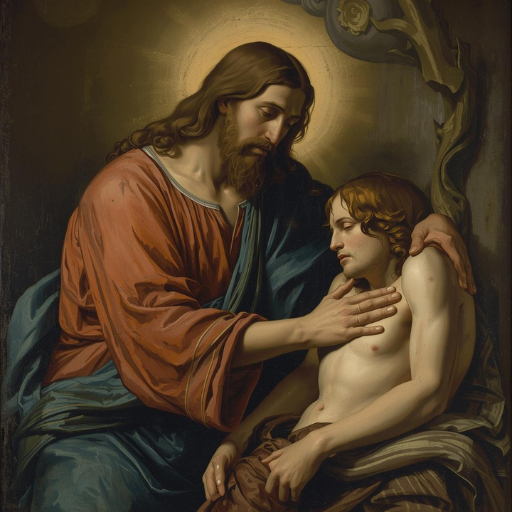
Grace remains because Jesus fully entered our humanity. Hebrews reminds us that Christ doesn’t save us from a distance. He walks with us through suffering. He helps us when we are weak.
The Long of It
Hebrews 2 tells us something both profound and comforting: Jesus became fully human so that He can fully help us. The Son of God did not stay untouched by pain, temptation, or fear. Instead, He stepped into our experience, sharing our suffering to redeem it.
This passage insists that salvation is not abstract or theoretical. Jesus knows what it is to struggle, to be afraid, to feel the weight of obedience, and to endure suffering. Because of that, He can help those who are tested. Grace remains not because life gets easier after Christmas, but because Jesus stays here in the hard places that follow.
As one year ends and another begins, Hebrews invites us to trust a Savior. He understands our weakness and stands with us in it. We do not face the future alone. The grace revealed in Christ continues—strong, compassionate, and near.
Context: Setting the Scene
Historical Context
Hebrews was written to early Christians facing pressure, persecution, and temptation to abandon their faith. The author encourages them by emphasizing Jesus’ full humanity. He highlights His role as a faithful High Priest who stands with God’s people in suffering.
Literary Context
This passage sits within a section explaining why Jesus needed to become human. The author draws heavily on Old Testament imagery and theology. It shows how Jesus fulfills and surpasses earlier understandings of suffering. Furthermore, it explains sacrifice and redemption.
Theological Context
Hebrews 2 reveals a Savior who:
- Shares fully in human suffering
- Breaks the power of fear and death
- Calls us brothers and sisters
- Offers real help in times of temptation
Theologically, this passage anchors Christian hope in Christ’s empathy and nearness—not distance or detachment.
Today’s Text (New Living Translation)
‘God, for whom and through whom everything was made, chose to bring many children into glory. And it was only right that he should make Jesus, through his suffering, a perfect leader, fit to bring them into their salvation. So now Jesus and the ones he makes holy have the same Father. That is why Jesus is not ashamed to call them his brothers and sisters. For he said to God, “I will proclaim your name to my brothers and sisters. I will praise you among your assembled people.” He also said, “I will put my trust in him,” that is, “I and the children God has given me.” Because God’s children are human beings—made of flesh and blood—the Son also became flesh and blood. For only as a human being could he die, and only by dying could he break the power of the devil, who had the power of death. Only in this way could he set free all who have lived their lives as slaves to the fear of dying. We also know that the Son did not come to help angels; he came to help the descendants of Abraham. Therefore, it was necessary for him to be made in every respect like us, his brothers and sisters, so that he could be our merciful and faithful High Priest before God. Then he could offer a sacrifice that would take away the sins of the people. Since he himself has gone through suffering and testing, he is able to help us when we are being tested.’
Hebrews 2:10-18
https://www.bible.com/bible/116/HEB.2.10-18
Key Insights
- Jesus saves by entering fully into our humanity.
- Grace remains because Christ stays present in suffering.
- Jesus understands temptation and offers real help.
- Fear and death do not have the final word.
- We are not alone—Christ calls us family.
Jesus Questions
- Where do I need to trust that Jesus truly understands my struggles?
- How might Jesus be offering help to me right now?
- What fear is Jesus inviting me to release as this year comes to a close?
Leave a Reply